
Understanding why the engineering behind your device matters for your hearing journey.
As an ENT surgeon and cochlear implant specialist, one of the questions I get asked most often is: “Will my implant work well?” The honest answer is this – the moment your implant leaves the cochlear implant manufacturing facility, its potential is already built in. That’s why I want to share what I learned visiting the Advanced Bionics facility, so you understand what goes into the device that will help you hear.
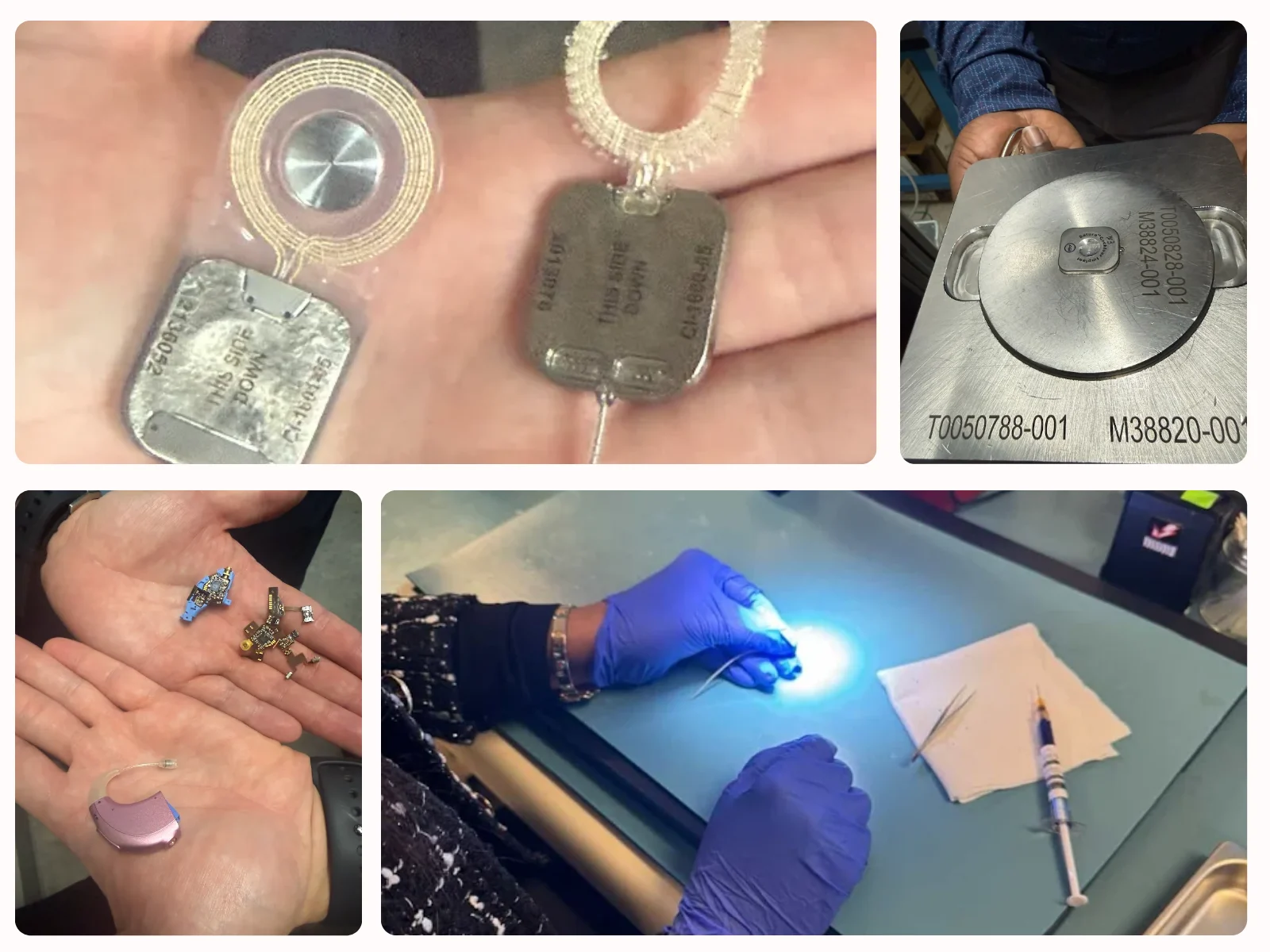
When most people think about a cochlear implant, they picture the external sound processor behind the ear. But the real engineering magic happens inside. The receiver-stimulator package, shown in these images, is a tiny, sophisticated computer that sits just under the skin. It receives wireless signals from your processor and converts them into electrical stimulation that travels directly to your auditory nerve.
The Precision You Can't See
The receiver-stimulator package is roughly the size of a postage stamp. Inside it are layers of circuitry, magnets, and lead wires so fine they’re barely visible to the human eye. To assemble these components, engineers and technicians work in specialized clean rooms where the air is filtered more than 30 times per hour to prevent even tiny dust particles from contaminating the device.
Here’s what makes this important: every connection, every wire placement, every magnet position influences how your implant delivers sound. If the engineering is precise, your device can deliver clearer, more detailed sound information to your auditory nerve. If corners are cut, you notice it in your hearing quality.
Why This Matters for Your Outcomes
At Dr. Rao’s ENT Cochlear Implant Centre, we don’t just place an implant and hope for the best. We work with carefully engineered devices from partners like Advanced Bionics because that precision engineering directly affects what we can achieve in surgery and rehabilitation. When your implant is built to exacting standards, your audiologist can fine-tune it more effectively during mapping. Your speech therapist has better starting material to work with during rehabilitation. Your overall hearing journey becomes more successful.
This is also why we take time with patient selection and surgical planning. A precisely engineered device deserves a precisely executed surgical approach to maximize its potential.
You're Not Just Getting a Device; You're Getting Craftsmanship
Cochlear implant manufacturing isn’t automated on an assembly line. The most critical work happens by hand, under microscopes, by skilled technicians who understand that their work directly affects people’s lives. That level of care and attention is something we carry forward into every surgery and follow-up appointment.
When we talk about a 99.9% success rate at our centre, part of that comes from working with technology built to this standard, paired with surgical expertise and genuine commitment to your hearing journey.
If you’d like to learn more about cochlear implants or schedule a consultation to discuss whether an implant is right for you, please book an appointment here.
FAQs
What is cochlear implant manufacturing?
Cochlear implant manufacturing is the process of designing, assembling, testing, and quality-checking implant components in highly controlled clean-room environments to ensure safety, reliability, and long-term performance.
Why is precision engineering important in cochlear implants?
Precision engineering ensures that every component of the implant works accurately, allowing electrical signals to be delivered consistently to the auditory nerve for better hearing outcomes.
How are cochlear implants tested before implantation?
Manufacturers perform multiple quality assurance tests, including electrical performance, durability, hermetic sealing, and reliability testing, before an implant is approved for clinical use.
Does the quality of cochlear implant manufacturing affect hearing results?
Yes. High-quality manufacturing improves device reliability, allows more precise programming (mapping), and supports better speech perception and long-term hearing performance when combined with expert surgery and rehabilitation.
Why are cochlear implants manufactured in clean rooms?
Clean rooms prevent dust, moisture, and microscopic contaminants from damaging sensitive electronic components, ensuring each implant meets strict medical-grade quality standards.
How does Dr. Rao's ENT Cochlear Implant Centre ensure the best outcomes?
The centre combines advanced cochlear implant technology, meticulous surgical planning, experienced implant surgeons, personalized device mapping, and ongoing auditory rehabilitation to help patients achieve the best possible hearing outcomes.