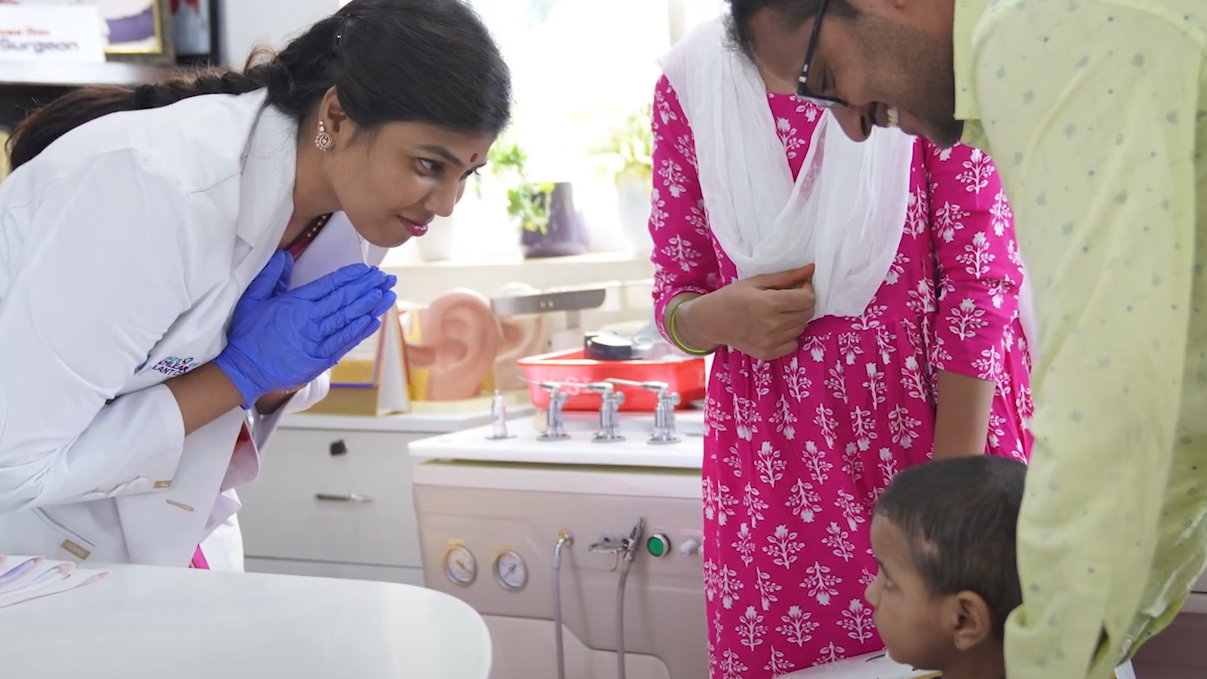
As a cochlear implant surgeon, one of the most common questions I receive from parents after surgery is, “Now that my child can hear, what comes next?”
The answer is clear: Auditory-Verbal Therapy (AVT).
A cochlear implant gives access to sound, but it’s AVT that helps the brain learn to understand and use those sounds for communication. This structured, evidence-based approach bridges the gap between hearing and listening, allowing children to grow into confident communicators who can learn, play, and interact like their hearing peers.
At my clinic, Dr. Rao’s ENT Cochlear Implant Center, I’ve witnessed how dedicated AVT transforms outcomes. I often tell parents that the implant is just the beginning – the real magic unfolds through therapy, consistency, and parental involvement.


Brain Training: Teaching the Brain to Hear
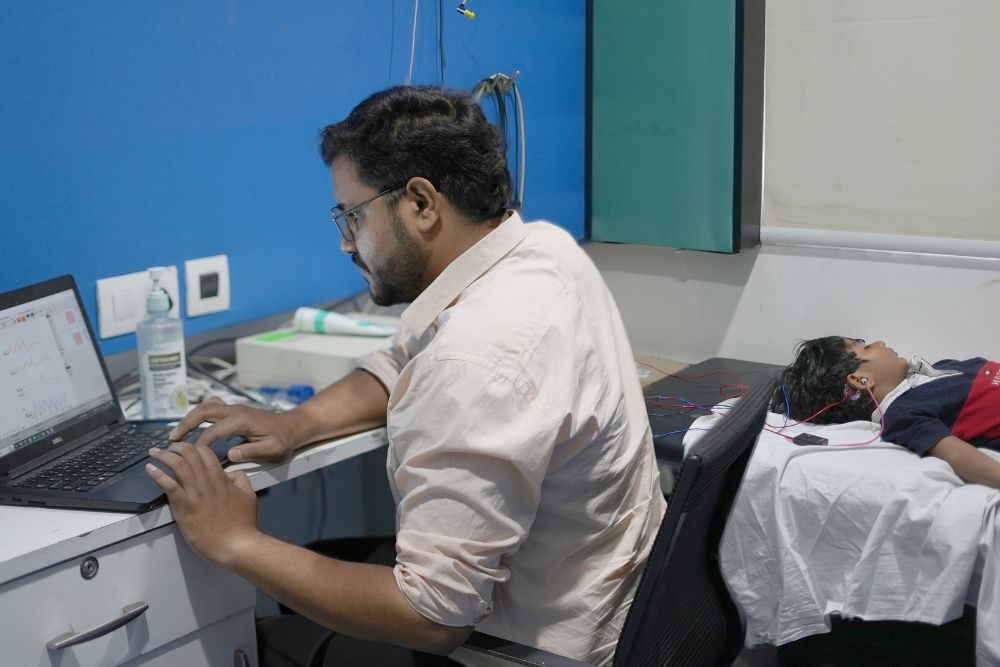
When a child receives a cochlear implant, the brain is suddenly exposed to sounds it has never processed before. Auditory-Verbal Therapy teaches the brain to interpret these new signals – to distinguish between background noise and speech, recognize words, and attach meaning to sounds.
This process is much like learning a new language. Just as a child needs exposure, repetition, and interaction to learn to speak, the brain needs consistent auditory input and guided training to understand sound.
AVT sessions are designed to create a “listening-first” environment, encouraging children to focus on what they hear rather than relying on visual cues like lip-reading. Over time, this brain training allows them to listen actively and communicate naturally.
Speech and Language Development: Listening Leads to Speaking
Auditory-Verbal Therapy is the primary method for developing listening and spoken language after a cochlear implant.
In early sessions, therapists work on identifying sounds – such as bells, voices, and music. As therapy progresses, the focus shifts toward building vocabulary, sentence formation, and natural speech patterns.
Children begin to associate sound with meaning. A car honking, a bird chirping, or their parent calling their name all become familiar and recognizable. These real-world listening experiences are reinforced in therapy sessions, at home, and during playtime.
The results are extraordinary. I’ve seen children who were once completely silent start chatting, laughing, and expressing themselves confidently. Through AVT, they not only learn to hear but also to communicate and connect with the world around them.
Intensive and Consistent: The Key to Success
Auditory-Verbal Therapy requires commitment, consistency, and collaboration.
Successful outcomes are built on regular, high-quality therapy sessions paired with daily listening practice at home.
Most children benefit from multiple sessions each week, especially in the early months after implantation. But the real progress happens outside the clinic – during family conversations, playtime, reading, and day-to-day interactions.
Every moment becomes a learning opportunity: talking while dressing, describing the weather, or singing rhymes in the car. These small, consistent listening experiences help reinforce the brain’s ability to process and respond to sound.
In my experience, children who receive frequent, well-guided AVT sessions and strong home support achieve remarkable listening and speech milestones within months of activation.
Parental Involvement: The Heart of AVT
Parents are not just observers in this journey – they are active partners in therapy.
In each AVT session, parents learn strategies to create a rich auditory environment at home. From reading aloud daily to encouraging open-ended conversations, they play a crucial role in reinforcing what the child learns during therapy.
I often remind parents that they are their child’s most important teachers. The way you respond to your child’s attempts to listen, speak, and communicate can make all the difference. Positive reinforcement, patience, and daily engagement accelerate progress and build confidence.
At my clinic, I ensure every parent leaves each session empowered – with practical tools to support listening and speaking in everyday situations.
Beyond the Device: Building a Life of Communication
It’s important to remember that the cochlear implant provides access to sound, but AVT provides the pathway to meaningful communication.
A child may have a perfectly functioning implant, but without AVT, they may struggle to interpret sound or use it effectively for speech and learning. Conversely, with consistent AVT, children not only catch up to their peers but often thrive academically and socially.
The ultimate goal of AVT is integration – helping children live, learn, and communicate in the hearing world without dependence on sign language or lip-reading. It’s about building independence and confidence through listening and speaking.
I’ve had the privilege of seeing children who once lived in silence now enjoying music, conversations, and laughter – all because their families embraced AVT as an essential part of their journey.
Final Thoughts
A cochlear implant is a medical marvel that restores access to sound, but Auditory-Verbal Therapy gives that sound meaning. It is through AVT that children learn to listen, understand, and speak – unlocking the true potential of their cochlear implant.
If your child has recently undergone cochlear implantation or is preparing for one, I strongly encourage you to make AVT an integral part of your rehabilitation plan. With dedication, guidance, and love, your child can develop the listening and speech skills needed to thrive in a hearing world.
For more insights on cochlear implant care, visit www.earsurgeon.in, where I share patient stories, practical tips, and updates on pediatric hearing care. Together, we can help every child experience life’s beautiful sounds.