
One of the most common questions I hear from parents after their child receives a cochlear implant is: will my child be able to play? Will they have to stop running around, playing football, climbing trees, riding bicycles? The answer is almost always yes, they can. In fact, I’ve had children implanted before their second birthday go on to live completely normal, active childhoods and participate in a wide range of cochlear implant sports activities. The fear that a cochlear implant makes a child fragile is one of the biggest myths I encounter in my practice, and it’s worth setting straight.
The Fragility Myth
Many parents assume that cochlear implants are delicate devices that require their children to live quietly on the sidelines of childhood. This is not accurate. Modern cochlear implants are engineered to handle the demands of active children. The implanted portion, which sits beneath the skin, is protected by bone and tissue. It is not exposed to impact or contact in the way you might worry. The external processor (the part that sits on the ear or on the body) is what parents often worry about most, and that concern is understandable. But here too, the technology has evolved significantly.
External processors are built to withstand daily wear and tear. They are designed for moisture resistance and can handle the bumps, falls, and rough play that come with childhood. Manufacturers have invested considerable research into making these devices durable because they know children will be children. That means play, sweat, movement, and yes, occasional knocks to the head.
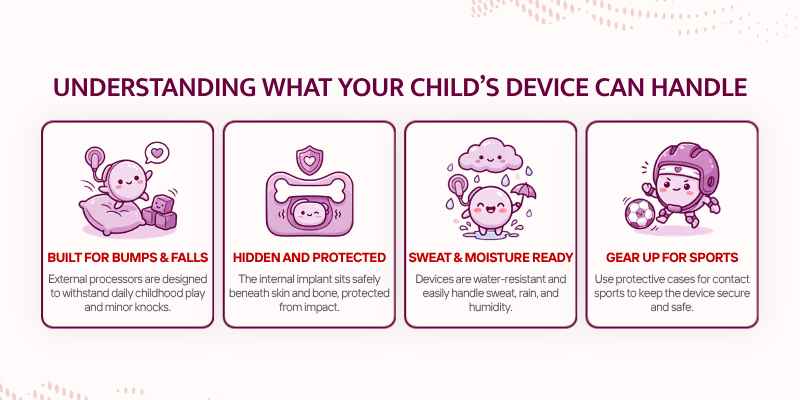
Understanding What Your Child's Device Can Handle
The external processor for a cochlear implant functions similarly to a hearing aid in terms of its durability standards. Modern processors are water-resistant (though specifications vary by model and manufacturer). They can handle sweat from physical activity and minor water exposure. This means your child can participate in most everyday activities without special precautions beyond common sense.
Protective cases specifically designed for cochlear implant processors are available and recommended for children in contact sports or high-impact activities like football, cricket, or gymnastics. These cases are lightweight, secure the processor in place, and absorb impact. Using one is similar to using protective eyewear in sports; it’s a sensible precaution, not an indicator that the device is fragile.
Cochlear Implant Sports Activities: What Parents Should Know
Most sports are accessible to children with cochlear implants. Running, cycling, climbing, football, basketball, badminton, and many other activities are entirely manageable. The key is preparation and the right protective gear when needed.
For non-contact activities like running or cycling, protective cases may not be necessary, though some parents choose to use them for extra assurance. For contact sports, a protective case is a practical investment. For water sports, speak with your child’s implant team about their specific processor’s water resistance rating. Some children use waterproof covers; others use a protective pouch during swimming lessons. Your child’s audiologist and surgeon can guide what suits your device and your comfort level.
Practical Safety Steps
Start by understanding your specific processor model and its durability specifications. Your implant team can provide this information and will likely have practical advice based on what they see in their practice. Ensure the processor is secure and fitted properly so it won’t fall off during activity. If using a protective case for sports, practice putting it on and taking it off so your child becomes comfortable with it.
Teach your child to be aware of their device (much like a child becomes aware of glasses), but this should not translate into fear or hesitation about play. A normal childhood of running, jumping, and exploring is not only possible but encouraged. If your child takes a fall or the processor receives impact, don’t panic. Most of the time, everything is fine. If you notice any changes in sound quality or function afterward, contact your implant team.
Water, Sweat, and Daily Life
Your child can sweat freely during sports and physical activity. Moisture is not the enemy of modern processors. The same applies to rain or light water exposure. That said, submersion in water (swimming pools, rivers, beaches) requires different considerations depending on the processor model. Your audiologist will clarify what is safe for your child’s specific device and can recommend waterproof covers or backup processors if needed.
The Bottom Line
A cochlear implant should expand your child’s world, not limit it. With a little preparation and the right information, your child can be as active as any other child their age. They can play, run, fall, get back up, and grow. This is what normal childhood looks like.
If you have specific concerns about your child’s activity or need guidance on protective gear for a particular sport, your implant team is there to help. We want to see children thrive.
Ready to discuss your child’s development and activity options? Schedule a consultation with Dr. Shree Rao to get personalized guidance for your child’s needs.
FAQs
My child's processor fell during a cricket match. Should I be concerned?
External processors are built to withstand impacts from falls. Check for visible cracks or damage, and test if it powers on and produces sound normally. If everything appears fine, it likely is. Contact your implant team if you notice any changes in audio quality or function. Most falls do not damage the device.
How do I know if my child needs a protective sports case?
For contact sports like football, cricket, or rugby, a protective case is recommended. For non-contact activities like running or cycling, one is optional. When selecting protective gear or deciding on activity levels, consulting with a top cochlear implant surgeon in Hyderabad can help you make the best choice for your child’s specific needs and processor model.
Can my child swim with a cochlear implant?
It depends on your processor’s water resistance rating. Some processors handle splash and brief water exposure; others require waterproof covers or backup devices for swimming. Your audiologist will clarify what’s safe for your child. Never assume; always ask your implant team before introducing water activities.
What should I do if the processor gets wet?
Remove it immediately and allow it to dry thoroughly (usually overnight) before turning it back on. Most modern processors are moisture-resistant and recover well from accidental water exposure. If the device doesn’t function after drying, contact your implant team. Regular moisture exposure can shorten device lifespan, so protective covers are worthwhile for frequent water activities.
My child wants to play a contact sport I'm unsure about. Who should I consult?
Your implant surgeon and audiologist are your best resources. When seeking guidance on activity clearance and device protection, consulting with the best cochlear implant specialist in India ensures your child receives recommendations tailored to their unique situation. Dr. Shree Rao and her team evaluate each child individually.
How often does the external processor need replacement?
External processors typically last 5 to 10 years depending on use and care. Damage from falls or moisture may require earlier replacement, but this is rare with proper protective measures. Your implant team will advise when replacement is needed and can discuss insurance or financial options with you.