
When parents bring their child in for cochlear implant surgery, one of the most common questions I hear is not about recovery or outcomes, but about durability. “How long will it last?” they ask. “Will she need surgery again? What happens when the battery dies?” These questions reflect a real anxiety about making a lifelong commitment to a medical device. Concerns about the lifespan of a cochlear implant are understandable, especially when families are planning for their child’s long-term hearing journey. The truth is more nuanced and, fortunately, more reassuring than many families expect.
The Lifespan of a Cochlear Implant
Cochlear implants are engineered to be incredibly durable. The internal device—the part surgically placed under the skin—typically lasts 15 to 20 years or longer. Some studies show devices functioning well beyond 25 years. This longevity has improved steadily over the past two decades as manufacturing techniques have advanced and materials have become more robust.
The key distinction parents need to understand is this: the implant itself rarely fails. The battery, however, does not last forever. This is the primary reason why device upgrades become necessary over time, not implant failure.
Understanding Battery Life in Modern Devices
Battery longevity has changed dramatically in recent years. Early cochlear implant processors required daily battery changes or frequent charging routines. Today, most sound processors use rechargeable battery systems that provide 24 hours or more of continuous use on a single charge.
Advanced Bionics processors, for example, can deliver up to 24 hours of use per charge cycle, depending on usage patterns and settings. Some devices offer longer battery life in lower power modes. What matters most is that parents no longer face the anxiety of unexpected battery depletion during school or social activities.
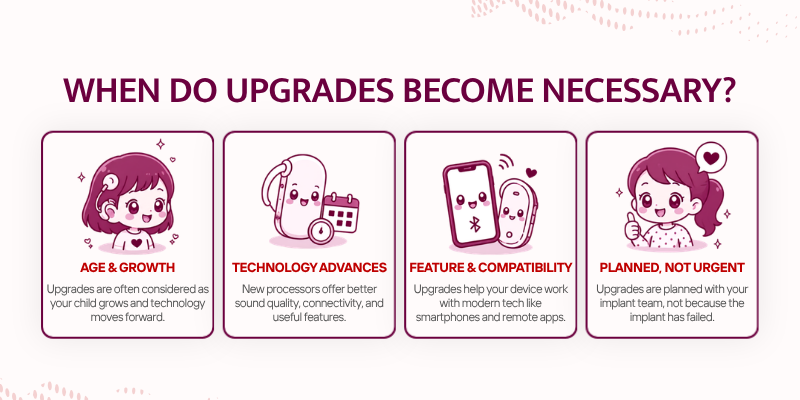
When Do Upgrades Become Necessary?
Upgrades are driven by technology advancement and component wear, not implant failure. The internal device may last decades, but the external processor—the part worn on or behind the ear—becomes outdated. New processors offer improved sound quality, connectivity features, waterproofing, and compatibility with modern devices like smartphones and tablets.
For a child implanted at age two, an upgrade might occur around ages 10 to 15, and then again in early adulthood. Adults implanted later in life may need fewer upgrades because the device lifespan exceeds their technological needs. The decision to upgrade is not urgent or emergency-driven; it is planned and discussed with your cochlear implant team.
The Financial Reality of Long-Term Care
This is where honest conversation matters. Cochlear implants require investment beyond the initial surgery. The internal device is covered under insurance in most cases, but ongoing costs include sound processor replacements, batteries or chargers, and accessories.
Parents planning for their child’s future should budget for periodic processor upgrades approximately every 5 to 10 years. Many manufacturers offer upgrade programs or trade-in options that reduce the cost. Some hospitals and implant centers help patients navigate insurance coverage for these replacements. Ask your surgical team about these programs during your initial consultation; this information should inform your decision-making.
Technological Obsolescence Versus Device Failure
An important mindset shift: your child’s implant will not become useless. It may become less convenient relative to newer technology, but it will continue to provide hearing. A processor from 2020 will still deliver sound in 2035. The upgrade decision is about accessing better features and improved sound quality, not recovering a failed system.
However, waiting too long to upgrade does carry risks. Older processors may not integrate with current smartphone technology or remote programming platforms. If your device cannot be reprogrammed remotely, accessing care becomes logistically difficult, especially in India where implant centers are concentrated in major cities. This is worth considering in long-term planning.
Maximizing Your Device's Lifespan
Daily care extends device life. Protect your processor from moisture, dust, and physical impact. Charge or replace batteries consistently rather than letting them drain completely. Avoid extreme temperatures. Follow the care instructions provided by your implant center. These habits reduce preventable damage.
Regular follow-up appointments with your cochlear implant team are equally important. Routine checks catch minor issues before they affect function. Your audiologist can also reprogram your device as your needs change, potentially extending the period before a full processor upgrade becomes necessary.
Planning for the Long Term
A child who receives a cochlear implant at age three will likely use hearing technology for 80+ years. That is a significant commitment, but it is manageable with proper planning. Discuss with your surgical team: What is the upgrade pathway? What does insurance typically cover? Are there financing options? What happens if the device malfunctions?
These conversations may feel uncomfortable, but they empower you to make informed decisions. Cochlear implants offer decades of benefit. Understanding how to sustain that benefit over time is part of responsible hearing healthcare.
If you have concerns about device longevity, planning for upgrades, or questions about the long-term care pathway for your child, we encourage you to discuss these with your implant team. These decisions are individual and depend on your family’s circumstances, location, and access to care.
Schedule a consultation with Dr. Shree Rao to discuss long-term planning for your child’s cochlear implant journey. Book an appointment or contact us at our clinic in Hyderabad.
FAQs
What is the average lifespan of a cochlear implant?
The internal cochlear implant is designed to last 15–20 years or longer, with many devices functioning successfully for more than 25 years.
Do cochlear implants need to be replaced regularly?
No. The internal implant rarely needs replacement. Most upgrades involve the external sound processor rather than additional surgery.
How long do cochlear implant batteries last?
Modern rechargeable cochlear implant batteries typically provide up to 24 hours of use on a single charge, depending on the device and usage.
When should a cochlear implant processor be upgraded?
Most users consider upgrading their sound processor every 5–10 years to access improved sound quality, connectivity, and newer technology features.
Will my child need another surgery for a cochlear implant upgrade?
In most cases, no surgery is required. Processor upgrades involve replacing the external component while keeping the internal implant intact.
How can I maximize the lifespan of a cochlear implant?
Regular maintenance, protecting the processor from moisture and damage, proper battery care, and routine follow-up appointments can help extend device performance and longevity.