During every consultation with parents considering cochlear implant surgery for their child, I’m asked the same important question: “Will my child get more ear infections and cochlear implants become a bigger concern after the implant?” It’s a concern I take seriously. The honest answer is this: ear infections and cochlear implants are manageable with the right approach. Yes, children with cochlear implants face a specific risk around bacterial meningitis related to untreated ear infections, but with awareness, vaccination, and prompt care, you can protect your child effectively.
Over my years of performing cochlear implant surgeries, I’ve guided hundreds of families through this successfully. The implant itself is safe. What matters is vigilance and knowing when to act. I want to empower you with the knowledge you need.
Why Ear Infections Require Extra Attention After Cochlear Implant Surgery
Ear infections are common in childhood. Most children experience at least one case of otitis media (middle ear infection) before age five. However, children with cochlear implants carry a specific additional concern: the risk of bacterial meningitis if an ear infection goes untreated.
Here’s how the pathway works. A cochlear implant requires a small opening to be created in the cochlea (the inner ear) during surgery. If bacteria from an untreated ear infection in the middle ear progress deeper, they can potentially reach the fluid surrounding the brain and spinal cord, leading to meningitis. The bacteria most commonly responsible is Streptococcus pneumoniae (pneumococcal meningitis), followed by Haemophilus influenzae type b. This risk is real but manageable. Children who are vaccinated against pneumococcal disease have significantly lower meningitis risk than unvaccinated children. The key is vaccination before surgery and prompt treatment of any infection.
Certain anatomical factors increase risk further. Children born with cochlear malformations, enlarged vestibular aqueducts, or those with a history of cerebrospinal fluid (CSF) leaks face higher vulnerability. Additionally, children who experienced meningitis before receiving a cochlear implant are at elevated risk for recurrence, requiring especially close monitoring.
Recognizing the Early Warning Signs
Knowing what to look for is your first line of defense. Ear infections in young children often develop quickly, and symptoms can vary depending on the child’s age and whether the infection is acute or chronic.
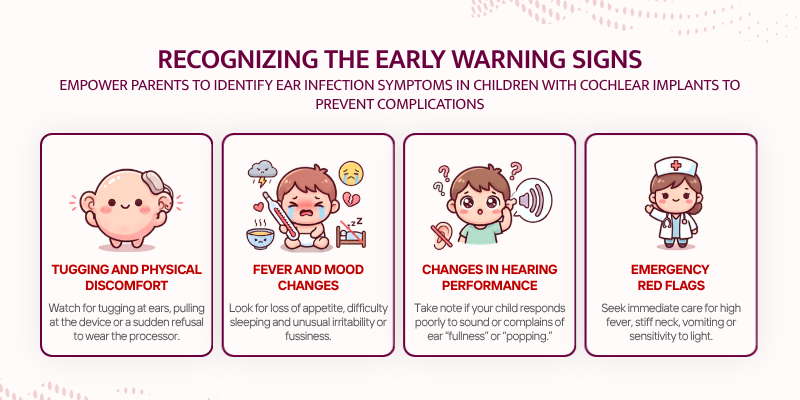
For acute otitis media (sudden middle ear infection), watch for ear pain, which children may express by tugging at the ear, pulling at the device, or refusing to wear the processor. Fever, especially in very young children, is a hallmark sign. Some children show loss of appetite, difficulty sleeping, or unusual irritability. You may notice clear, yellow, or even blood-tinged drainage from the ear. Some children report dizziness or balance problems, or they may suddenly respond poorly to sound through the cochlear implant processor. These last two signs are subtle but important clues.
Otitis media with effusion (fluid buildup behind the eardrum) is different. It typically causes no pain, which makes it harder to detect. The main clue is reduced hearing or poor cochlear implant performance. A child might complain of ear fullness or popping sensations, or you might notice mild hearing fluctuations day to day.
Certain symptoms demand immediate medical attention. High fever (above 39 degrees Celsius or 102 degrees Fahrenheit) combined with ear pain is a red flag. Severe ear pain that doesn’t respond to over-the-counter pain relief, stiff neck, sensitivity to light, confusion or unusual behavior, vomiting, or severe headache should trigger a trip to the emergency room. Any rash that doesn’t turn white when you press it, any sign of seizures or loss of consciousness, or extreme lethargy demands urgent evaluation.
Prevention: Your Most Powerful Tool
The most effective strategy to prevent meningitis in children with cochlear implants is vaccination. Ideally, pneumococcal vaccination should be completed at least two weeks before implant surgery, allowing the immune system time to build protection.
Vaccination in India: According to the Indian Academy of Pediatrics (IAP) 2025 Recommended Immunization Schedule, children should receive Pneumococcal Conjugate Vaccine (PCV) as part of their routine immunization. The primary series typically involves doses at 6, 10, and 14 weeks of age, with a booster at 15-18 months. Your pediatrician can guide you on whether your child qualifies for additional doses or the newer 14-valent pneumococcal vaccines (like PCV-14) now available in India, which offer broader serotype coverage.
The pneumococcal vaccines your child should receive include PCV13, PCV14, and PPSV23, depending on age and medical history. Your child should also be current on Haemophilus influenzae type b (Hib) vaccine and meningococcal vaccines for preteens and teens. These vaccines don’t provide 100 percent protection, but they significantly reduce both the risk of infection and the severity if infection does occur. Stay current with all routine childhood vaccines, including MMR and influenza shots, which protect against other infections that can lead to ear problems.
Beyond vaccination, daily practices matter. Teach your child proper handwashing, especially before touching the ears or the cochlear implant processor. Keep the processor clean and dry; moisture can harbor bacteria. Follow the manufacturer’s cleaning guidelines carefully. Avoid exposing your child to secondhand smoke and minimize contact with children who have active respiratory infections. If your child is an infant and you are able to breastfeed, this provides passive immune protection during the critical early months.
Protect the ear itself. Never insert objects like cotton swabs into the ear canal. If your child needs to bathe, use protective coverings to prevent water entry. Keep the ear canal dry at all times. If the cochlear implant processor is causing irritation or fit issues, address these promptly with your audiologist, as irritation can increase infection risk.
Monsoon Precautions (June to September): In India’s monsoon season, humidity levels spike significantly, creating ideal conditions for bacterial and fungal growth in trapped ear moisture. High humidity prevents the ear canal from drying out naturally. If your child experiences water exposure during heavy rainfall, dry the ears thoroughly afterward. During this season, be especially vigilant about keeping your child’s ears dry and addressing any early signs of ear infection promptly. Avoid self-cleaning practices using cotton swabs, matchsticks, or pins, as these can scratch the delicate ear canal and introduce bacteria directly into the skin.
When to Seek Medical Care: A Clear Decision Guide
Not every ear concern requires an emergency room visit, but knowing the difference between routine and urgent helps you make faster, better decisions.
Contact your audiologist or ENT during regular business hours if you notice changes in cochlear implant performance or sound quality, mild ear pain or tugging without fever, drainage without fever or severe pain, or suspected fluid buildup without acute symptoms. These situations warrant professional evaluation but can usually be handled during routine appointments.
Seek urgent care or a same-day appointment if your child develops fever combined with ear symptoms, persistent ear pain despite over-the-counter pain relief, drainage from the ear with fever, reduced hearing response accompanied by fever, or if a recent ear infection is not improving after 48 hours of antibiotics. These situations need evaluation by your child’s ENT or pediatrician within hours, not days.
Schedule a consultation with Dr. Shree Rao to discuss any questions or concerns for your child’s cochlear implant journey. Book an appointment here.
FAQs
Can children with cochlear implants get ear infections?
Yes. Children with cochlear implants can still develop ear infections just like other children. Prompt diagnosis and treatment are important to reduce the risk of complications.
Are ear infections more dangerous after cochlear implant surgery?
Ear infections require extra attention after cochlear implant surgery because untreated middle ear infections can increase the risk of bacterial meningitis. Early medical care and vaccination greatly reduce this risk.
How can parents prevent ear infections in children with cochlear implants?
Parents can help prevent infections by keeping vaccinations up to date, maintaining good ear hygiene, keeping the processor clean and dry, avoiding secondhand smoke, and seeking medical care when symptoms appear.
What are the warning signs of an ear infection in a child with a cochlear implant?
Common signs include ear pain, fever, ear drainage, irritability, tugging at the ear, balance problems, poor response to sound, or changes in cochlear implant performance.
Should my child receive pneumococcal vaccination before cochlear implant surgery?
Yes. Pneumococcal vaccination is strongly recommended before cochlear implant surgery. It helps lower the risk of serious infections, including bacterial meningitis.
When should I seek emergency medical care for my child?
Seek immediate medical attention if your child has a high fever with severe ear pain, stiff neck, confusion, persistent vomiting, seizures, unusual drowsiness, or a rash that does not fade when pressed.