
When your newborn is diagnosed with hearing loss, one of the first questions you may have is, “Why did this happen?” In some babies, the answer may be a change in a gene called OTOF. Understanding the OTOF gene can help parents understand the cause of OTOF gene and hearing loss and make informed decisions about treatment.
What is the OTOF gene?
The OTOF gene provides instructions for making a protein called otoferlin. This protein plays an important role in helping the inner ear’s sensory cells send sound signals to the hearing nerve.
Changes in both copies of the OTOF gene can cause severe to profound hearing loss, often from birth or early infancy.
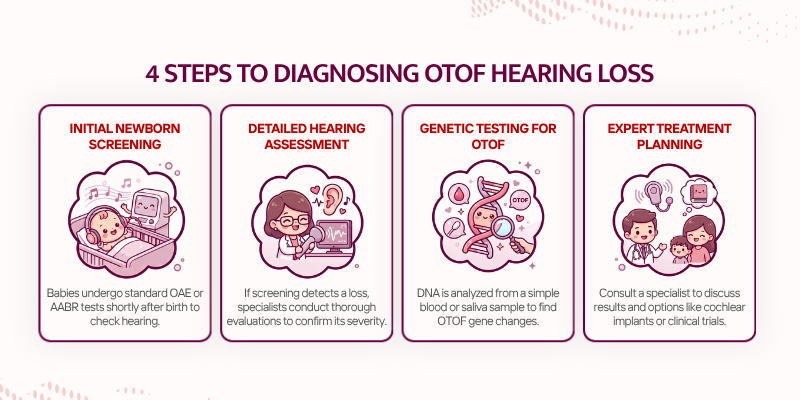
How is OTOF-related hearing loss diagnosed?
Newborns usually undergo hearing screening using tests such as OAE or AABR. If the screening indicates possible hearing loss, further hearing tests are performed.
Genetic testing can then determine whether changes in the OTOF gene are responsible. This is generally done using a blood or saliva sample.
Identifying the genetic cause can help doctors and parents understand the condition and plan appropriate treatment.
What is OTOF gene therapy?
Gene therapy is an emerging approach that aims to deliver a functional copy of the OTOF gene to the affected cells in the inner ear. The goal is to enable these cells to produce otoferlin and restore the pathway involved in hearing.
Early clinical research has reported encouraging improvements in hearing in some children. However, gene therapy is still an emerging treatment, and researchers are continuing to study its effectiveness, safety and long-term outcomes.
What happens if a baby is diagnosed with OTOF-related hearing loss?
The next step is early and detailed hearing assessment. Depending on the severity of hearing loss, treatment may include hearing aids or cochlear implantation.
Early intervention is particularly important because hearing plays an important role in speech and language development.
As of September 2026, OTOF gene therapy is not an established, routinely available treatment in India. Families may therefore need to consider established hearing rehabilitation options while keeping informed about emerging clinical trials and future treatment availability.
Dr. Shree Rao has extensive experience with cochlear implantation, including pediatric cochlear implants, and has performed more than 200 cochlear implant procedures. She is also associated with specialists working in the emerging field of hearing-loss gene therapy. Through these collaborations, Dr. Shree Rao and her team are working to bring awareness of advances in genetic hearing loss and emerging therapies to families in India.
Will gene therapy give my baby normal hearing?
There is currently no way to guarantee normal hearing after OTOF gene therapy. The response can vary between children, and researchers are still studying how completely and consistently hearing can be restored and how long the benefits may last.
The important message for parents is that an OTOF diagnosis does not mean there are no options. Genetic diagnosis, early hearing intervention and appropriate treatment can help guide the child’s hearing and communication journey.
If your baby has been diagnosed with OTOF-related hearing loss, an early evaluation with an experienced cochlear implant team can help you understand the available options. You can book an appointment with Dr. Shree Rao to discuss your child’s hearing assessment and treatment pathway.
FAQs
Can parents who can hear normally have a child with OTOF-related hearing loss?
Yes. OTOF-related hearing loss can follow an autosomal recessive inheritance pattern. Parents may carry a change in the gene without having hearing loss themselves.
How is OTOF genetic testing performed?
Testing generally involves collecting a blood or saliva sample and analysing the child’s DNA for changes in the OTOF gene.
When should parents consult a cochlear implant specialist?
Parents should seek an early evaluation when significant hearing loss is confirmed. A specialist can explain the available options and help determine the appropriate timing of intervention. Families looking for a best cochlear implant specialist in Hyderabad may consider a specialist with experience in pediatric hearing loss and cochlear implantation.