
Losing hearing completely deaf in one ear can feel like something you should simply adapt to. Yet many people find that everyday conversations, crowded places, and knowing where a sound comes from become surprisingly difficult. As an ENT surgeon, I often see patients who have learned to manage with one hearing ear but still struggle in situations they cannot easily explain. For some of these patients, a single sided deafness cochlear implant may offer a way to restore auditory input to the deaf ear.
The real struggles of single sided deafness: noise, direction, and fatigue
Single-sided deafness means that one ear has little or no useful hearing while the other ear continues to hear. The impact is not limited to volume. The brain normally receives information from both ears and compares those signals to understand where sounds are coming from and to make sense of speech when there is competing background noise.
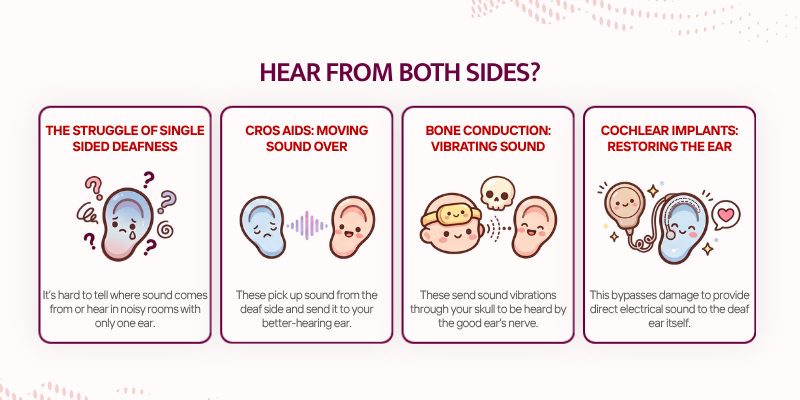
With only one functioning ear, conversations in restaurants, classrooms, offices, family gatherings, or busy streets can become harder. A person may need to turn their head to position the hearing ear towards the speaker. Locating a ringing phone, approaching vehicle, or someone calling from another direction can also be difficult.
This constant effort can contribute to listening fatigue. In multilingual Indian households, where conversations may move between languages and several people may speak at once, these challenges can become particularly noticeable.
Tinnitus, the perception of sound such as ringing or buzzing without an external source, may also accompany single-sided deafness. For some people, this becomes an additional burden.
For a broader discussion of the practical challenges, read about living with unilateral hearing loss.
Single sided deafness cochlear implant: CROS aids, bone conduction devices, and implants
There is no single hearing solution that is appropriate for everyone with single-sided deafness. The choice depends on the cause and severity of hearing loss, the condition of the hearing nerve and inner ear, hearing in the better ear, tinnitus, age, and individual needs.
CROS, or Contralateral Routing of Signal, hearing aids use a microphone on the deaf side to pick up sound and transmit it to a hearing aid worn on the better-hearing ear. This can make sounds originating on the deaf side more accessible, but the signal is still ultimately heard through one ear.
Bone conduction devices take a different approach. They transmit sound vibrations through the skull to stimulate the functioning inner ear on the opposite side. Like CROS, this can help overcome the head-shadow effect, but it does not restore hearing to the deaf ear itself.
A cochlear implant is fundamentally different. A cochlear implant bypasses damaged parts of the inner ear and electrically stimulates the hearing nerve. In appropriately selected people with single-sided deafness, implantation can provide auditory input to the previously deaf ear.
The goal is therefore not simply to make sound louder. It is to give the brain access to information from both sides again. For an explanation of how binaural hearing works, the principles are similar to those involved in hearing with two ears.
Who benefits most from implantation for single sided deafness?
A single sided deafness cochlear implant is not automatically the best option for everyone. Careful assessment is important because the potential benefit depends on several factors.
Candidates may include people with severe to profound hearing loss in one ear who receive limited benefit from conventional amplification, particularly when difficulties with hearing in noise, sound localisation, or tinnitus significantly affect daily life. The cause and duration of deafness are also relevant.
Assessment usually involves a detailed hearing evaluation along with examination of the ears and, where appropriate, imaging and other tests. The hearing team also considers the health of the cochlea and hearing nerve and whether the person is likely to benefit from electrical stimulation.
Expectations matter as well. Hearing through a cochlear implant does not immediately sound identical to natural hearing. The brain needs time to adapt to the new input, and rehabilitation and listening practice can be an important part of the process.
The decision should therefore be individualised rather than based simply on the fact that one ear is deaf.
What restored binaural input changes in daily life
The most important potential change is that the brain once again receives auditory information from both sides. This can improve access to sounds arriving from the implanted side and may make some listening situations less demanding.
Sound localisation is one area where binaural input can be particularly useful. With information from both ears, the brain can compare differences in timing and level between the two sides. This helps it estimate where a sound originates.
Hearing in background noise can also be challenging for people with single-sided deafness. Restoring input to the poorer ear may provide additional information that helps the brain separate a speaker from competing sounds. However, outcomes vary, and a cochlear implant should not be presented as a guarantee of normal hearing in noise.
For some patients, tinnitus is another important consideration. Cochlear implantation may reduce tinnitus in some people with single-sided deafness, but this effect is not universal and should not be the sole reason for choosing implantation.
The broader objective is functional hearing: being better able to participate in conversations, respond to sounds around you, and navigate everyday environments without constantly compensating for one non-hearing ear.
Conclusion
Living with single-sided deafness can involve much more than simply hearing less on one side. Difficulty understanding speech in noise, locating sounds, listening for long periods, and coping with tinnitus can affect everyday life. For appropriately selected patients, a single sided deafness cochlear implant can restore auditory input to the deaf side and potentially provide benefits that CROS and bone conduction devices cannot, because those alternatives route sound to the better-hearing ear.
The right choice requires an individual hearing and medical assessment. If single-sided deafness is affecting communication or quality of life, discussing the available options with an experienced cochlear implant team is a sensible next step. You can book an appointment for an assessment and discussion of whether implantation may be appropriate.
FAQs
Can a cochlear implant make a completely deaf ear hear normally?
A cochlear implant can provide electrical auditory input to an ear with severe to profound hearing loss, but the resulting hearing is not the same as natural hearing. The brain needs time to adapt, and outcomes differ between individuals.
Is a cochlear implant better than a CROS hearing aid for single-sided deafness?
Neither option is universally better. CROS devices route sound from the deaf side to the better ear, while a cochlear implant provides input to the deaf ear itself. The appropriate choice depends on the individual’s hearing profile, anatomy, duration of deafness, tinnitus, lifestyle, and expectations.
How do I know whether I need an expert cochlear implant evaluation?
An evaluation is particularly useful when one-sided hearing loss is affecting communication, hearing in noise, sound localisation, or daily activities despite trying conventional options. When choosing a specialist, experience with cochlear implantation and careful candidate assessment are important. Patients seeking this evaluation may consider a best cochlear implant specialist in Hyderabad based on clinical experience, training, and the suitability of the proposed treatment.