
One of the most important factors in cochlear implant success for children is timing. Parents often ask me, “Does age really matter for cochlear implantation?” The answer is yes – profoundly. When it comes to developing hearing and language, there is something known as the critical window, a sensitive period in early childhood when the brain is most receptive to sound and language input. Missing this window can have long-term effects on how well a child learns to listen, speak, and communicate.
Over years of performing cochlear implant surgeries and following children through rehabilitation at my practice and through EarSurgeon.in, I’ve seen how early intervention can completely transform outcomes. Understanding this ‘critical window’ helps parents make informed decisions that can shape their child’s hearing journey for life.

Brain Plasticity
Young brains are incredibly adaptable, making early intervention highly effective for developing auditory pathways. This adaptability is called neuroplasticity – the brain’s ability to reorganize itself in response to sensory experiences.
In the early years, the brain eagerly absorbs information from the environment. When a child hears sounds, neural circuits related to hearing become stronger and more specialized. However, if auditory stimulation is delayed – because of severe hearing loss or late diagnosis – those circuits remain underdeveloped.
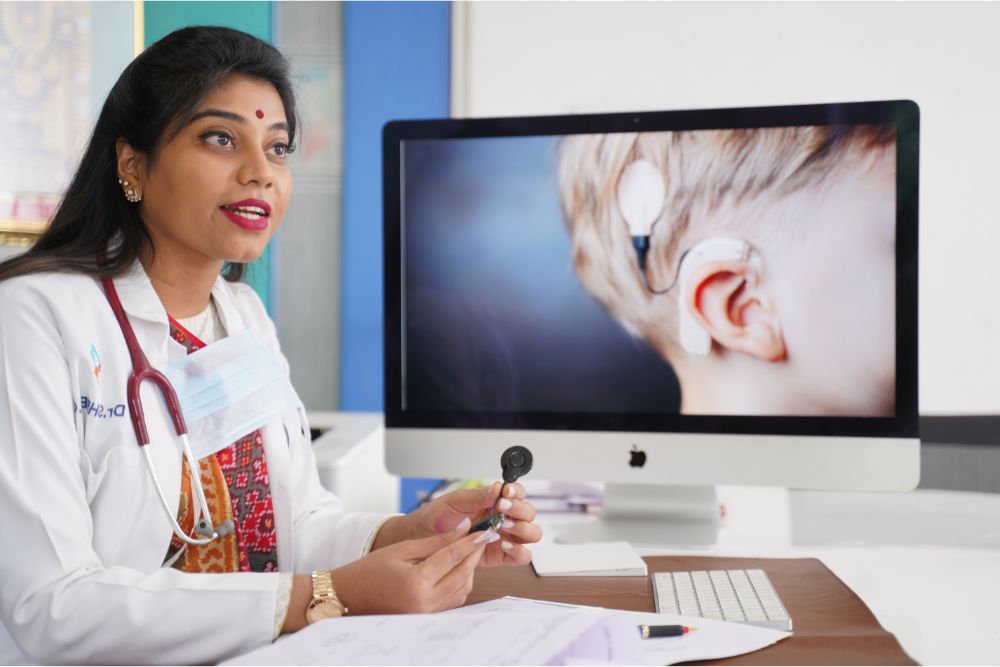
Cochlear implants give the auditory system access to sound, but the brain still has to learn how to interpret those sounds. When implantation occurs early, the brain can adapt quickly and efficiently, forming strong auditory and language connections. The younger the child, the greater the plasticity – and the better the outcomes.
Language Development
Timely access to sound during critical periods is essential for speech and language acquisition. Language development in children depends on consistent exposure to speech sounds in the first few years of life. This is when they learn to differentiate between sounds, associate them with meaning, and eventually produce speech themselves.
If a child cannot hear during this stage, their brain doesn’t receive the necessary auditory input to build these associations. Even a few years of delay can make it difficult to catch up later. Studies have shown that children implanted before the age of two often develop speech and language skills comparable to their hearing peers, while those implanted later may continue to lag despite therapy.
At my clinic, I work closely with audiologists and speech therapists to ensure that children receive not just the implant at the right time, but also consistent post-operative auditory-verbal therapy to nurture their language skills during this golden period.
Auditory Pathways
Neural connections for hearing form rapidly in early childhood, and the ‘window’ is when these pathways are most receptive. The auditory cortex, located in the brain’s temporal lobe, is responsible for processing sound. This region of the brain develops most rapidly during the first three years of life.
When the brain does not receive sound input during this time, the auditory cortex may be repurposed by other senses – such as vision or touch. This phenomenon is known as cross-modal plasticity. Once that happens, even after cochlear implantation, it becomes harder for the brain to fully adapt to sound because those pathways are already occupied by other sensory inputs.
By implanting early, we ensure that sound input reaches the brain when it is most ready to receive and process it. This early stimulation supports the natural growth of auditory and speech-language networks, laying a foundation for successful listening and communication.
Missed Opportunity
Delaying implantation can make it significantly harder for a child to catch up on speech and language development. The longer a child remains without meaningful sound input, the more difficult it becomes to bridge that developmental gap.
Parents sometimes delay implantation due to fear, misinformation, or hope that hearing aids might eventually suffice. While hearing aids are valuable for children with mild to moderate hearing loss, they often cannot provide enough benefit for those with profound hearing loss.
By the time delayed implantation occurs – often after age five or six – the child’s brain has already adapted to a world without sound. While improvement is still possible, speech clarity, comprehension, and natural language rhythm may not fully reach age-appropriate levels. This is why timely assessment and decision-making are crucial.
At EarSurgeon.in, I encourage families to undergo early hearing evaluations, especially if their child shows limited response to hearing aids or speech delays. Acting early ensures we don’t lose precious time within the critical window.
Optimal Outcomes
Studies consistently show that children implanted earlier achieve better speech perception and language outcomes. Children who receive their implants before 18 months of age often develop listening and speaking abilities close to their normal-hearing peers. Even those implanted by age two to three show excellent progress, provided they receive consistent auditory-verbal therapy.
In contrast, children implanted later typically require longer rehabilitation and may rely more on lip reading or visual cues. While every child’s journey is unique, the data strongly supports early implantation for optimal results.
As Hyderabad’s best cochlear implant specialist, I’ve witnessed the incredible transformation that happens when a child begins hearing at the right time. The joy in their eyes when they respond to their parents’ voices or dance to music for the first time is truly indescribable.
In Summary
The ‘critical window’ is not just a medical concept – it’s a biological opportunity. It represents the brain’s most sensitive and powerful phase of growth for hearing and language. Acting within this window ensures your child has the best possible foundation for communication, learning, and social development.
If you suspect your child has hearing loss, don’t wait. Seek an evaluation early. With timely diagnosis, the right guidance, and consistent therapy, your child can experience the full richness of sound and speech.
At EarSurgeon.in, I’m passionate about helping families understand these crucial timelines and take informed, confident steps toward their child’s hearing future. Because when it comes to hearing, time truly matters.