One of the most common questions I hear from parents is, “Is my child a candidate for a cochlear implant?” It’s an important and often emotional question, especially for families who have already tried hearing aids and other therapies without seeing the progress they hoped for. Cochlear implants have changed the lives of countless children born with or affected by severe hearing loss. But they are not for everyone – and determining candidacy requires a detailed, multidisciplinary evaluation.
Over the years, I’ve guided hundreds of families through this process at my practice and through EarSurgeon.in. While every child’s hearing journey is unique, certain signs can help parents understand whether it’s time to explore cochlear implantation more seriously.
Here are the five key signs to look for.

Limited Response to Traditional Hearing Aids
Despite consistent use of properly fitted hearing aids, does your child show minimal or no improvement in responding to sounds, understanding speech, or developing spoken language?
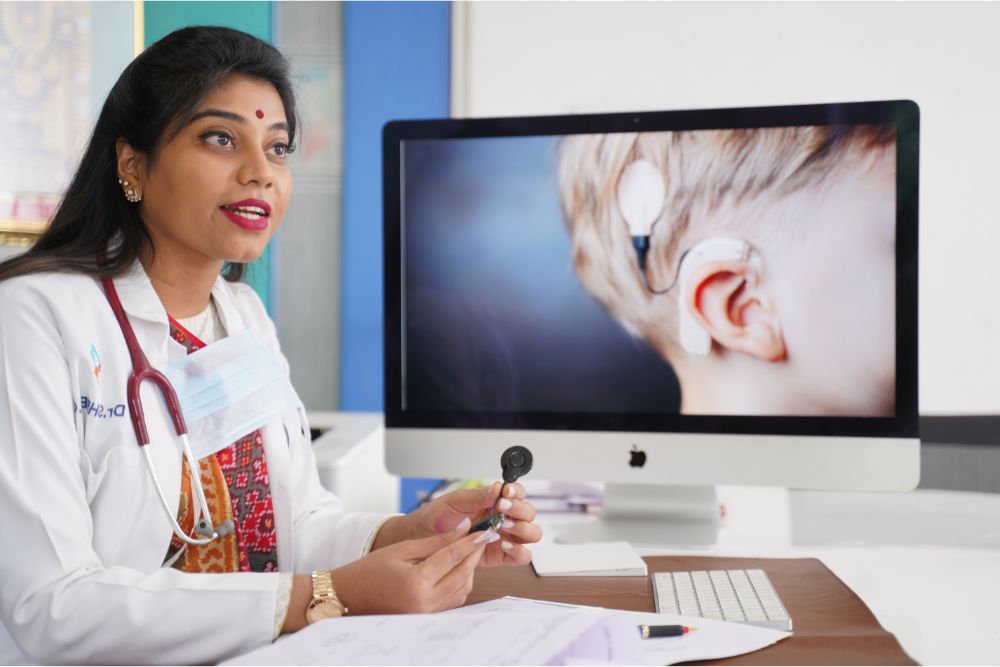
This is one of the earliest indicators that a cochlear implant evaluation may be necessary. Hearing aids amplify sound, but if the inner ear is too damaged to process that sound effectively, even powerful amplification won’t help. Parents often notice that their child doesn’t turn toward voices, respond to name calls, or react to environmental sounds like clapping or doorbells despite months of hearing aid use.
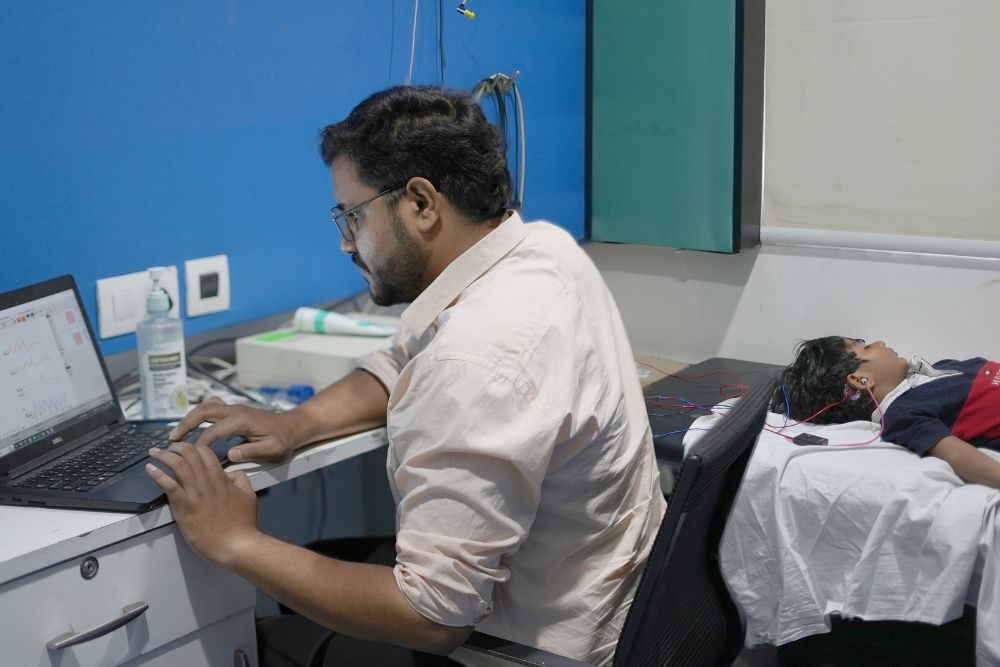
At this stage, it’s important to consult a specialized cochlear implant team. The evaluation includes comprehensive audiological testing, aided and unaided hearing assessments, and speech perception testing to determine if amplification is providing sufficient benefit.
Profound Sensorineural Hearing Loss
Has audiological testing confirmed a profound sensorineural hearing loss in one or both ears, meaning the inner ear (cochlea) or auditory nerve is severely damaged?
Children with profound sensorineural hearing loss typically struggle to detect even loud environmental sounds. Standard hearing aids can only provide limited benefit because the sensory hair cells within the cochlea, which convert sound vibrations into electrical signals, are damaged or absent.
In such cases, a cochlear implant can bypass the damaged hair cells and directly stimulate the auditory nerve, enabling the child to perceive sound. It’s a remarkable technology that can open up an entirely new world of hearing – but identifying the degree and nature of hearing loss through accurate diagnosis is the crucial first step.
Lack of Speech and Language Development
Is your child experiencing significant delays in speech and language development, not acquiring age-appropriate vocalizations, words, or sentences, even with consistent intervention?
Speech and language milestones are strong indicators of auditory access. If your child is not babbling by 9–12 months, not using simple words by 18 months, or not forming sentences by age 3, despite wearing hearing aids and attending therapy, it may suggest that sound perception is insufficient for normal language development.
As a pediatric ENT and cochlear implant surgeon, I always remind parents that the earlier we intervene, the better the outcomes. The brain’s auditory centers are most adaptable in early childhood. Timely implantation, followed by intensive auditory-verbal therapy, can help children catch up with their peers in communication skills.
No Benefit from Auditory-Verbal Therapy (AVT) or Other Therapies
Despite engaging in intensive auditory-verbal therapy or other auditory training programs, is your child not making expected progress in listening and speaking skills?
AVT is a cornerstone of hearing rehabilitation for children with hearing loss. However, if a child has reached a plateau despite consistent participation, it may be time to reconsider the technology supporting their hearing. A cochlear implant can often provide the clarity and access needed for therapy to become more effective.
Families sometimes feel disheartened when therapy alone doesn’t yield results, but this is exactly where a thorough cochlear implant evaluation can provide answers. The goal is not to replace therapy but to empower it with the right hearing technology.
Motivation and Realistic Expectations from Family
Is your family committed to the rigorous post-operative rehabilitation process, including consistent use of the implant, attending therapy sessions, and supporting your child’s listening and spoken language journey?
Even the best surgical outcomes depend on what happens afterward. Cochlear implantation is not a quick fix – it’s a long-term partnership between the surgeon, audiologist, therapist, and family. Children require continuous mapping sessions, therapy, and home-based practice to maximize benefits.
As a parent, your motivation and involvement are the single biggest predictors of your child’s success. At EarSurgeon.in, I work closely with families to set realistic expectations, educate them about the process, and prepare them for the post-surgical journey. When parents are informed and motivated, the results are truly transformative.
Taking the Next Step
If your child shows one or more of these signs, it may be time to discuss cochlear implantation with a qualified ENT surgeon. Early intervention can make all the difference in your child’s ability to hear, understand, and communicate effectively.
As one of India’s leading cochlear implant specialists, my goal is to help families navigate this decision with confidence, compassion, and clarity. Every child deserves the chance to experience the beautiful world of sound – and with the right guidance, that dream can become a reality.
In Summary
- Minimal improvement with hearing aids may signal the need for further evaluation.
- Profound sensorineural hearing loss often indicates cochlear implant candidacy.
- Delays in speech and language are strong indicators of auditory limitations.
- Limited progress in AVT suggests it’s time to reassess hearing technology.
- Family motivation is the foundation for long-term success.
Choosing to explore cochlear implantation can be a life-changing step. When done at the right time, with the right team, it can unlock a lifetime of sound, connection, and communication for your child.