Introduction
When parents first explore cochlear implants for their child, or when adults consider the procedure for themselves, the surgery cost often dominates the conversation. Many families begin their research with a cochlear implant surgery cost guide before making a treatment decision. But I have learned over my years working with families through their hearing journey that the device and operation represent only the opening chapter of expenses. Understanding the cochlear implant total cost means looking beyond the operating room and planning for the years of care, therapy, and maintenance that follow. The true investment in a cochlear implant is a multi-year commitment that many families underestimate without a full financial picture.
One-Time Costs: The Surgery and Initial Investment
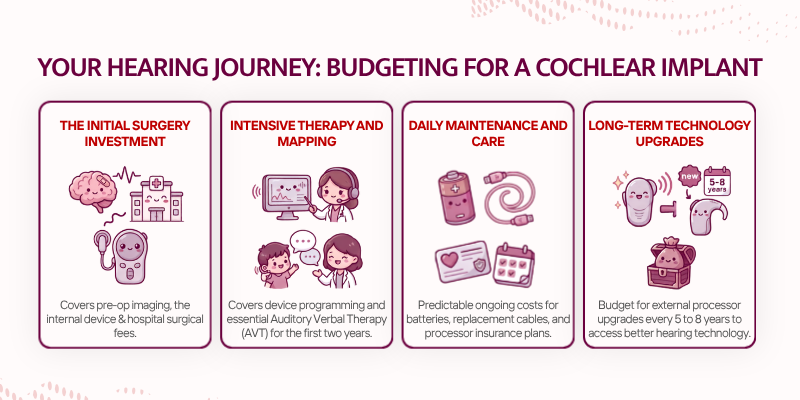
The first major expense includes the pre-operative evaluation, the procedure itself, the implant device, and the hospital stay. This upfront cochlear implant total cost typically happens as a single event, but it is far larger than the device price alone. The evaluation involves hearing tests, imaging such as CT or MRI scans, and sometimes psychological assessment to ensure candidacy. The surgery itself requires an operating theater, anesthesiologist, surgical staff, and sophisticated monitoring equipment. The internal device is engineered and manufactured to exacting standards, and its cost reflects decades of research. Hospital stay duration depends on individual recovery, local protocols, and whether any complications arise. In India, where many hospitals offer competitive pricing, families should ensure they understand what this initial investment covers and what remains to be paid after discharge.
The First Two Years: Mapping Sessions and Auditory Verbal Therapy
After the device is activated, the cochlear implant total cost accelerates as your child enters a critical learning phase. Mapping visits, or programming sessions, occur frequently in the first months and gradually decrease over time. Each session fine-tunes the device’s settings to match your child’s developing hearing and growing speech perception. Auditory Verbal Therapy (AVT) is equally essential during this window. Research consistently shows that structured speech therapy in the early years after implantation drives better speech and language outcomes. AVT requires trained specialists, often involving multiple sessions per week depending on your child’s age and needs. Travel costs emerge as a real line item during this phase, especially for families who must journey to a cochlear implant center. In India’s geography, this may mean overnight stays, meals, and transport costs that extend beyond the therapy fees themselves. Budget for these 24 months as the most intensive period, after which costs typically level.
Ongoing Costs: Batteries, Cables, and Processor Care
Once your child enters elementary school or your adult routine stabilizes, the cochlear implant total cost shifts to predictable maintenance. External processors require power, whether through rechargeable batteries, disposable zinc-air batteries, or both if you keep backups. Cables, coils, and microphone components wear out and need replacement. Some families choose insurance or protection plans for the processor to cover accidental damage or loss, offering peace of mind in exchange for monthly or annual premiums. In households with multiple children who are deaf or in families planning for the long term, having a spare processor is practical but adds to overall costs. Unlike hearing aids, which families often replace every five years, a well-maintained cochlear implant processor typically serves longer, but unexpected failures do occur. Build a modest annual budget for these consumable and protective measures, and discuss extended warranty options with your implant center.
Long-Term Planning: Processor Upgrades and Warranty Decisions
The cochlear implant total cost over a lifetime includes technology upgrades. Today’s processors offer superior battery life, better noise management, and connectivity features that older devices lack. Most manufacturers release improved external processors every five to eight years, creating an opportunity to upgrade if your insurance or out-of-pocket funds allow. Some insurance schemes in India, such as government cochlear implant subsidies under various health programs, may cover initial surgery but not later upgrades, leaving families to bridge the gap. The internal device, which is surgically implanted, typically lasts 20 to 30 years before eventual replacement might become necessary, but external technology evolves much faster. Understanding the lifespan of a cochlear implant and planning for incremental upgrades is part of responsible long-term budgeting. Discuss upgrade pathways with your surgeon and audiologist early, so financial planning aligns with your child’s changing needs as they grow.
Conclusion
The cochlear implant total cost extends far beyond what you pay on the day of surgery. Accounting for evaluation, therapy, maintenance, travel, and future upgrades gives you a realistic picture of the investment required. This clarity allows you to explore funding options, insurance coverage, and NGO assistance programs that may ease the burden. Your journey with a cochlear implant is a partnership with your implant team, and discussing finances openly helps everyone plan together. If you are exploring cochlear implants and want a thorough financial breakdown tailored to your circumstances, I encourage you to reach out for a consultation. You can schedule an appointment at https://cochlearimplant.in/book-an-appointment/ to discuss your child’s candidacy and the full scope of care.
FAQs
Does insurance in India typically cover cochlear implant costs beyond surgery?
Coverage varies widely depending on your insurance plan and state government schemes. Some policies cover surgery and a portion of initial mapping; others do not include therapy or processor maintenance. Public schemes such as ADIP (Assistance to Disabled Persons) in certain states cover specific expenses. Always request a detailed coverage letter from your insurer before proceeding, and ask your implant center which costs they have seen covered for families in your situation.
How much should we budget annually for batteries and replacements after the first two years?
This depends on your processor type and your child’s hearing level. Rechargeable processors reduce battery costs to electricity charges, while zinc-air batteries represent a small but recurring expense. Cables and microphone replacements, if needed, are occasional. Most families report annual ongoing costs ranging from modest to moderate once the intensive therapy phase ends, but keeping an emergency fund for unexpected processor failure is wise practice.
Can my child benefit from bilateral implants, and does that double the cochlear implant total cost?
Bilateral implants do offer binaural hearing benefits, which improve sound localization and speech clarity in noise. This does mean two devices, two sets of batteries, and two processors, doubling some expenses. However, the internal devices have long lifespans, and many families find the improved quality of life justifies the additional investment. Discuss the real benefits and true costs of bilateral options with a best cochlear implant specialist in Hyderabad or your regional center so you can make an informed choice.