
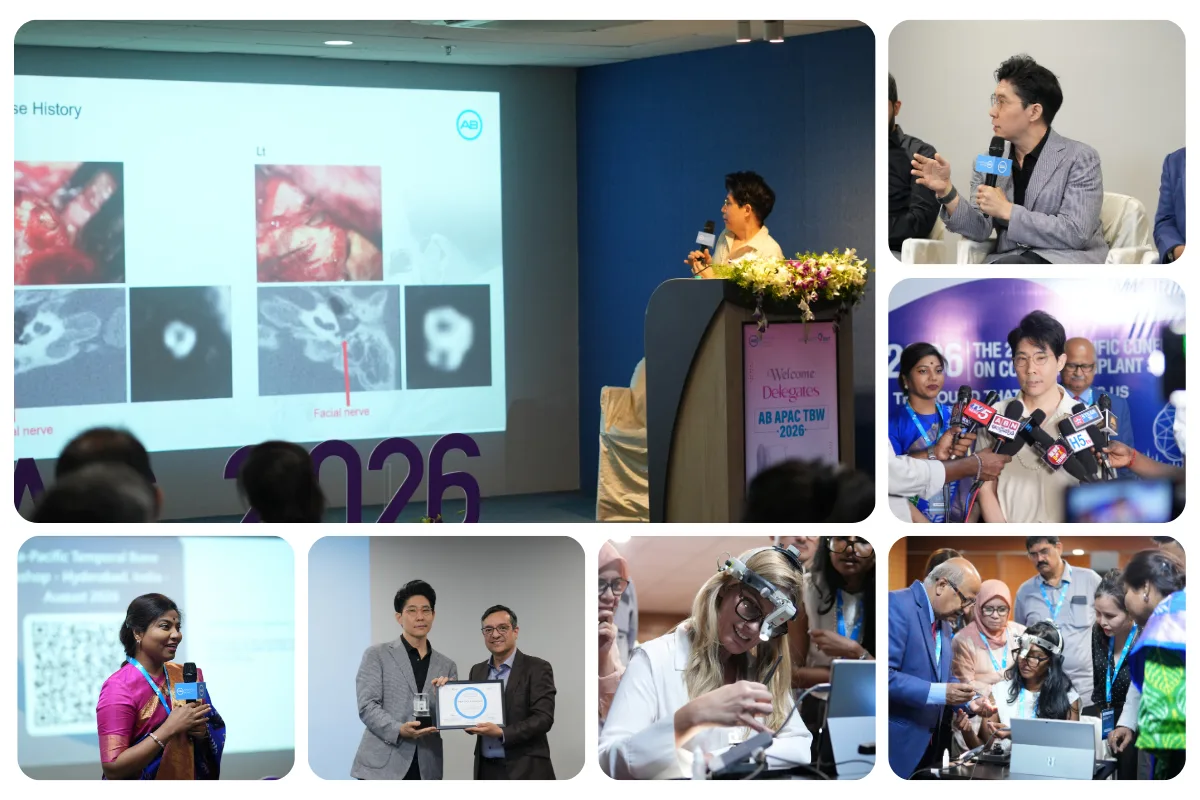
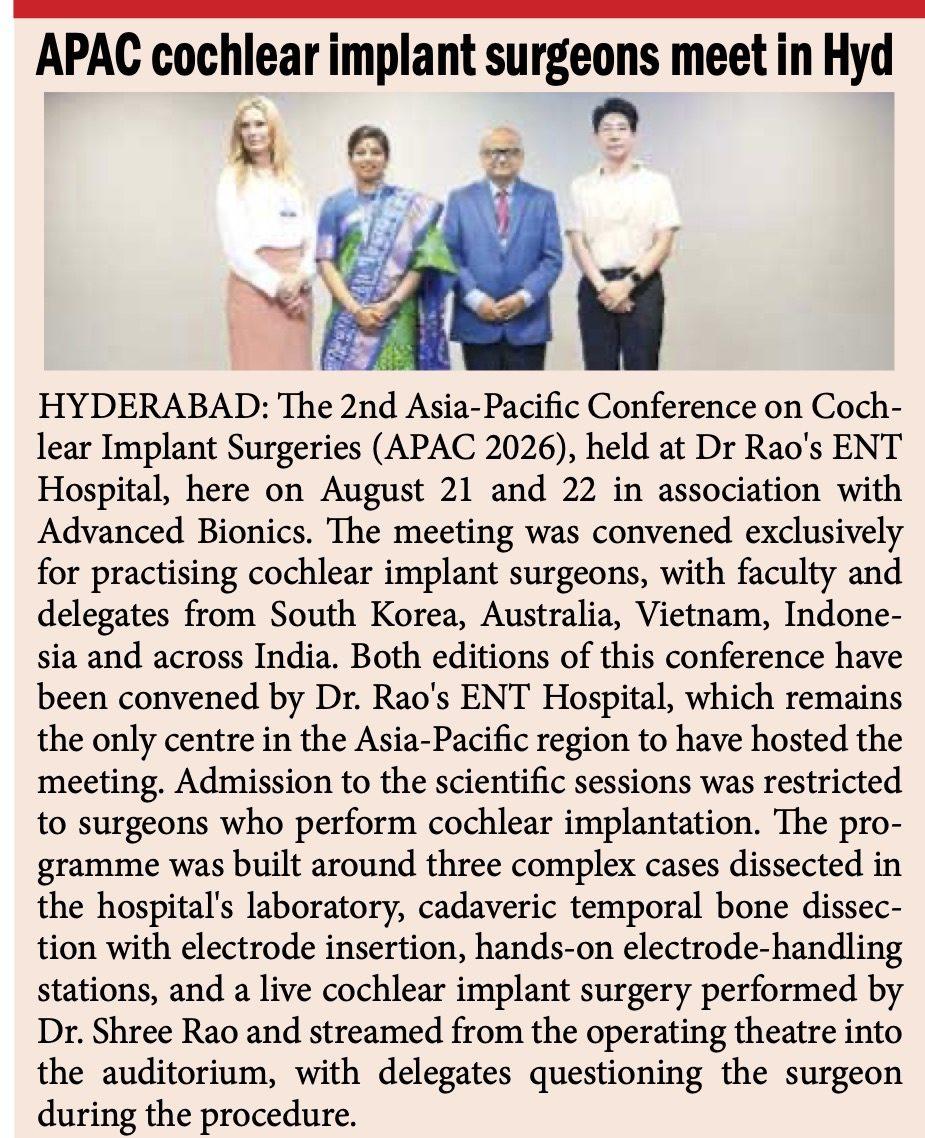
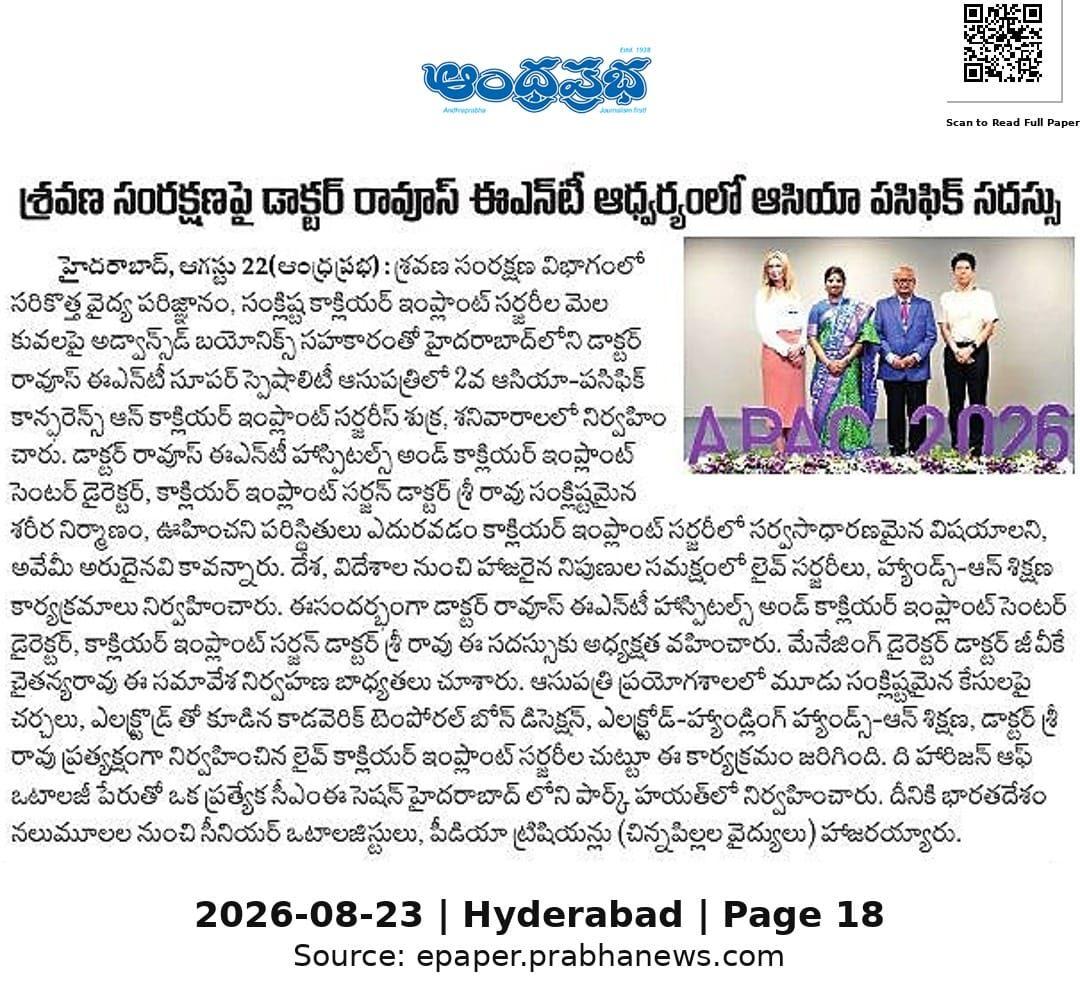
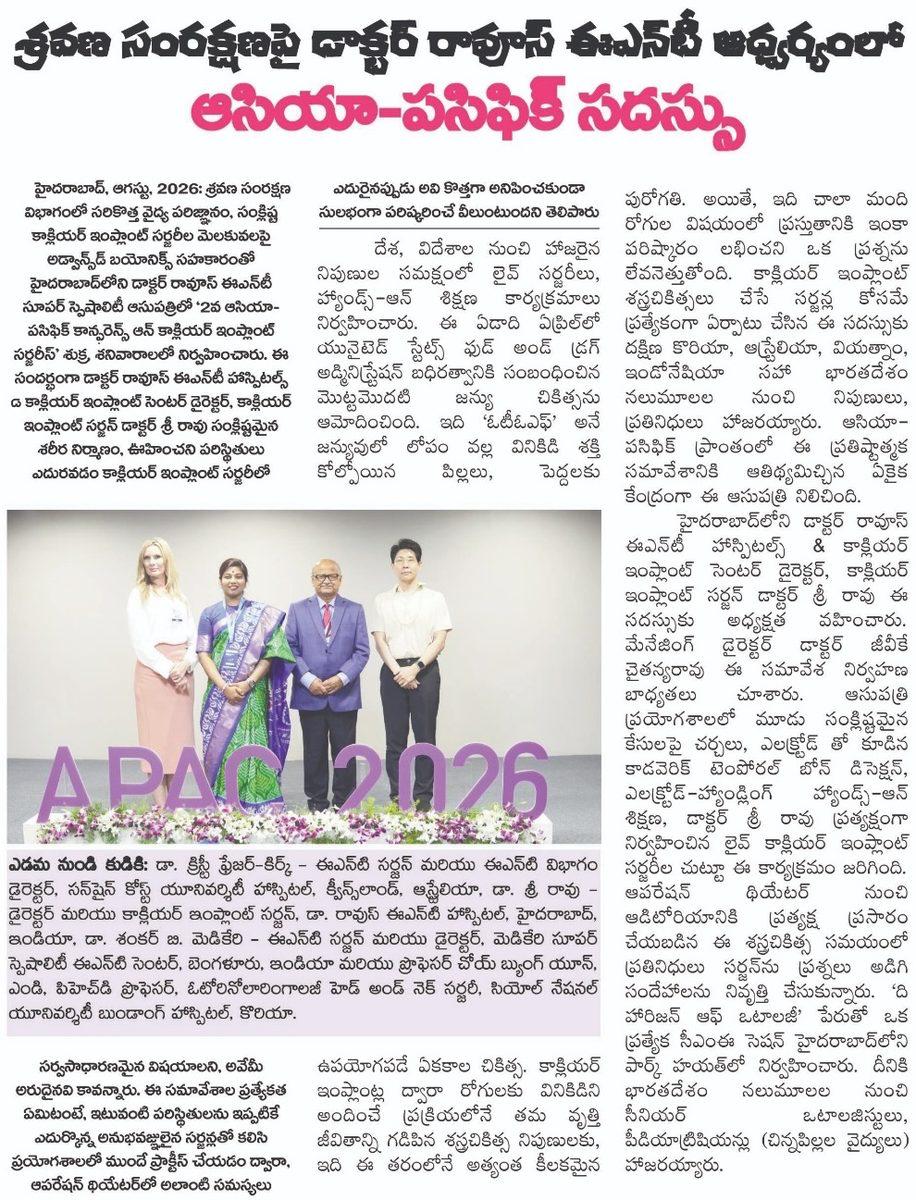
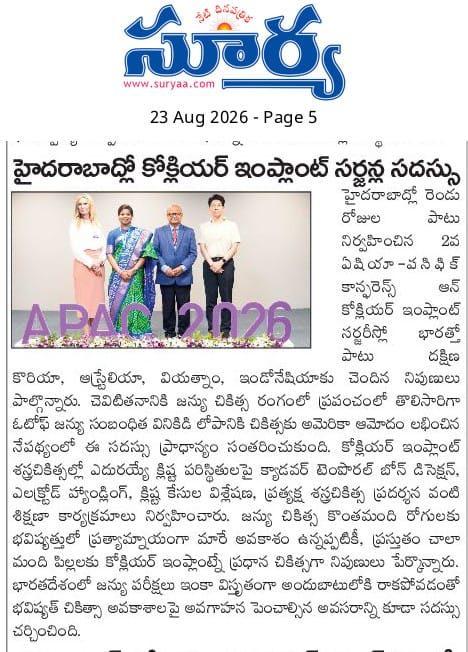
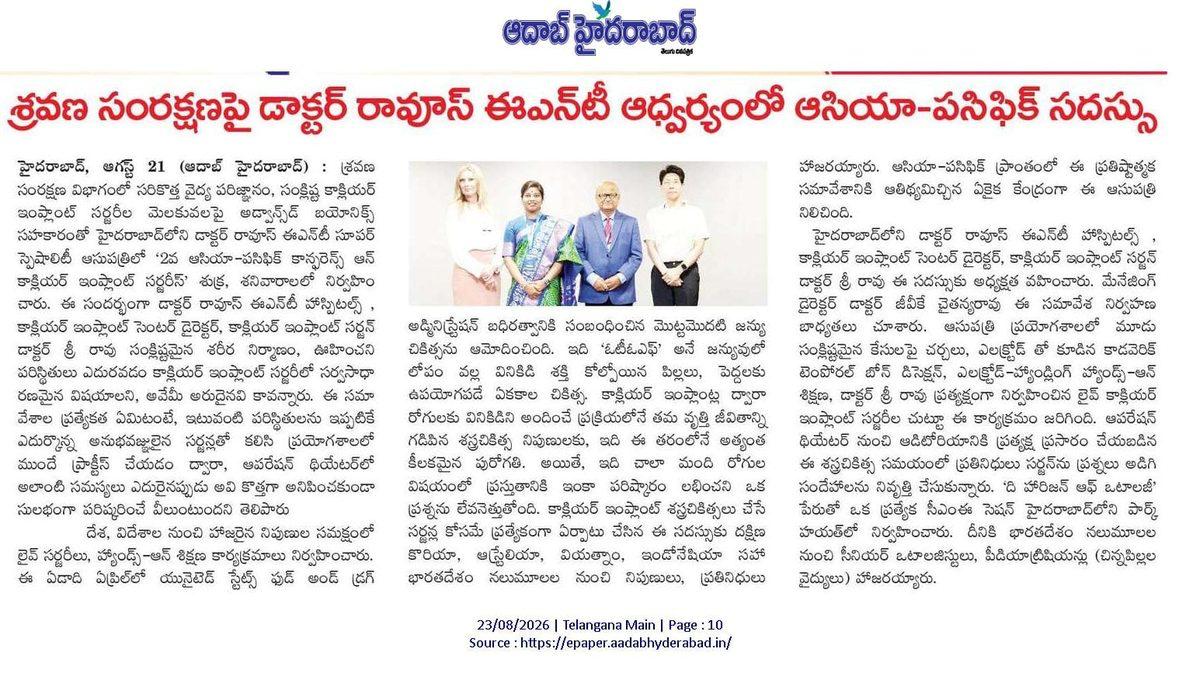
When a child is born with severe hearing loss, families naturally want to know whether medicine can restore hearing and what the future may hold. At APAC 2026 in Hyderabad, hosted by Dr. Rao’s ENT Hospitals, India’s most trusted ENT super speciality hospitals, gene therapy cochlear implants and the changing landscape of hearing restoration were among the important topics discussed.
Gene therapy cochlear implants: a changing landscape
The conference highlighted the emerging role of gene therapy in hereditary hearing loss. Discussions followed a reported US approval earlier in 2026 of a gene therapy targeting OTOF-related deafness.
Prof. Choi Byung Yoon of Seoul National University Bundang Hospital delivered a keynote address on gene therapy for hereditary hearing loss, including OTOF-related deafness, also known as DFNB9.
These developments represent an emerging area of hearing restoration, but the conference discussions also made clear that gene therapy does not currently apply to every form of inherited hearing loss.
Why the genetic cause matters
One of the important points raised during the meeting was the difference between genetic causes of hearing loss. OTOF mutations account for only a small proportion of inherited deafness, while GJB2 was described as a more common cause of inherited hearing loss in India that currently has no approved gene therapy.
This distinction matters because gene-based treatments are linked to particular genetic causes, an area Dr. Shree Rao has written about in the context of the role genetics plays in ear disorders and surgery. The conference also highlighted that genetic testing is not yet routinely conducted before cochlear implantation in India.
Understanding the underlying cause of hearing loss may therefore become increasingly important as genetic treatments develop.
Where cochlear implants continue to fit
The emergence of gene therapy does not mean cochlear implantation has become irrelevant. The conference highlighted that cochlear implants continue to remain an important treatment option for children and adults with severe hearing loss, and families are often guided by clear criteria for determining whether a child is a candidate for a cochlear implant.
The discussions presented gene therapy as a potential future treatment for selected patients, while cochlear implantation remains part of current hearing restoration practice.
APAC 2026 also included research related to cochlear implants. Dr. Shree Rao presented the methodology and findings of the BEEP Study, a collaboration with Advanced Bionics examining evoked potential measurements in cochlear implant recipients.
What the future may hold
The picture emerging from the conference is not one treatment replacing another. Instead, hearing restoration may increasingly involve better understanding of the cause of hearing loss, genetic testing where appropriate, targeted treatments for selected genetic conditions and cochlear implantation when indicated.
For families in India, these developments are important to follow, but they should be understood in the context of what is currently available and what remains under development.
Conclusion
The discussion around gene therapy cochlear implants at APAC 2026 reflected a field that is evolving rapidly, while also recognising the current limitations of gene-based treatments. If your family is dealing with severe hearing loss, a specialist evaluation can help clarify which treatment options are relevant today. Book an appointment to discuss your individual situation.
FAQs
Does gene therapy mean cochlear implants will no longer be needed?
No. The conference highlighted gene therapy as an emerging option for selected genetic forms of hearing loss, while cochlear implantation remains an important treatment option for severe hearing loss.
Can gene therapy treat all inherited hearing loss?
No. The conference specifically highlighted that different genetic causes of hearing loss require different approaches. OTOF-related deafness and GJB2-related hearing loss were discussed as examples.
Should families wait for gene therapy before considering a cochlear implant?
That decision depends on the individual case. Families should discuss the available options with a specialist rather than assuming an emerging treatment will be suitable or available for every genetic cause. Dr. Shree Rao, the best cochlear implant specialist in India can help explain the options based on the child’s or adult’s hearing status.